
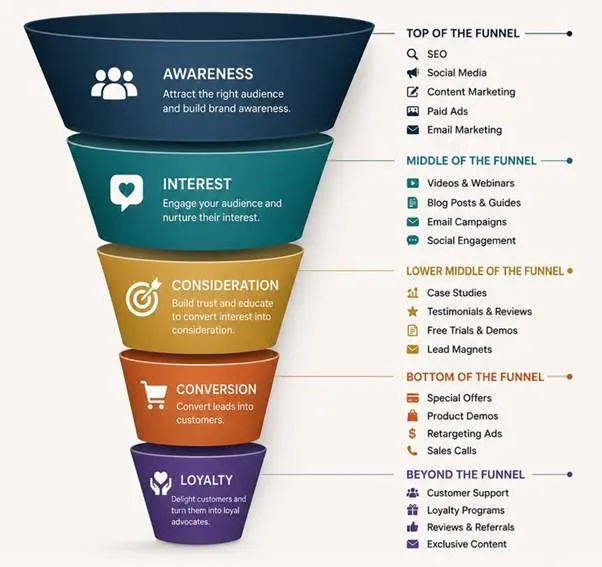
A marketing campaign can attract thousands of visitors and still fail to create meaningful business growth. The missing piece is often the funnel: the sequence that moves a person from first awareness to enquiry, purchase and follow-up. Companies that work with a digital marketing agency kl should pay as much attention to what happens after the click as they do to traffic generation. When each stage is clear, teams can identify where potential customers lose interest and make improvements that raise the value of existing traffic.
Map the Customer Journey
The first step is to understand how people normally discover and evaluate the business. A customer may notice a social post, search the company name later, read reviews, compare service pages and finally submit an enquiry. Another may start with a Google search and convert immediately. These journeys are not identical, so marketing should provide useful information at several points rather than relying on one perfect advertisement.
Businesses can map common stages such as awareness, consideration, conversion and retention. At each stage, ask what the customer needs to know and what action would naturally come next. This creates a more practical content plan and reduces the temptation to publish material simply because competitors are doing it.
Match Messages to Intent
Broad awareness messages should not be expected to convert like high-intent search traffic. A person learning about a problem needs education, while someone searching for a specific service may need availability, proof, price guidance or a simple contact option. Landing pages should reflect the promise made in the advertisement or search result. When the message changes abruptly, visitors may question whether they have reached the right place.
This is also where calls to action should be proportionate. A first-time visitor may prefer a guide or comparison, while a ready buyer may want a quote. Offering the right next step can improve conversion without making the page feel aggressive.
Use Local Signals Where They Matter
Location can be an important part of intent, particularly for businesses that serve customers face to face or within a defined area. A thoughtful Local SEO Malaysia strategy can strengthen the middle and lower parts of the funnel by helping people find relevant location information, reviews and service details when they are close to choosing a provider. Business profiles, locally relevant pages and consistent contact information reduce uncertainty and make the company easier to verify.
Local content should still be written for people. Pages that repeat place names without answering useful questions rarely create confidence. A stronger approach is to explain coverage, branch-specific details, local examples and what customers should expect when they make contact.
Reduce Friction at Conversion
Small obstacles can cause major losses near the bottom of the funnel. Long forms, slow pages, unclear pricing, hidden phone numbers or complicated checkout processes all create reasons to leave. Businesses should review the conversion path on both desktop and mobile and test it as if they were first-time customers.
Trust signals can also make a difference. Relevant testimonials, clear policies, professional design, secure payment cues, qualifications and realistic service explanations help people make decisions. The goal is not to overcrowd the page, but to answer the concerns that commonly delay action.
Measure the Right Drop-Offs
Analytics becomes more useful when it is tied to funnel stages. Instead of asking only how many people visited the site, teams can examine which sources bring engaged visitors, which pages support enquiries, where forms are abandoned and which leads become actual customers. Sales feedback is particularly valuable because the cheapest lead is not always the best lead.
Regular funnel reviews can reveal whether the business needs more traffic or better conversion. Sometimes the fastest growth comes from fixing an existing weakness rather than buying additional clicks. A stronger landing page, clearer offer or quicker response process may improve results across several channels at once.
Conclusion
Speed of follow-up belongs inside the funnel too. A well-qualified enquiry can lose value if nobody responds while the customer is still comparing providers. Businesses can set clear response standards, route leads to the right person and record common reasons for lost opportunities. That information should return to the marketing team. If a large share of leads ask the same question or fail at the same stage, the next campaign or landing-page revision can address it directly.
Digital marketing works best as a connected system. By mapping intent, strengthening local trust, removing conversion friction and measuring customer quality, businesses can turn more of their existing attention into revenue. The objective is not to maximise clicks; it is to create a smoother path from interest to a useful commercial outcome.
